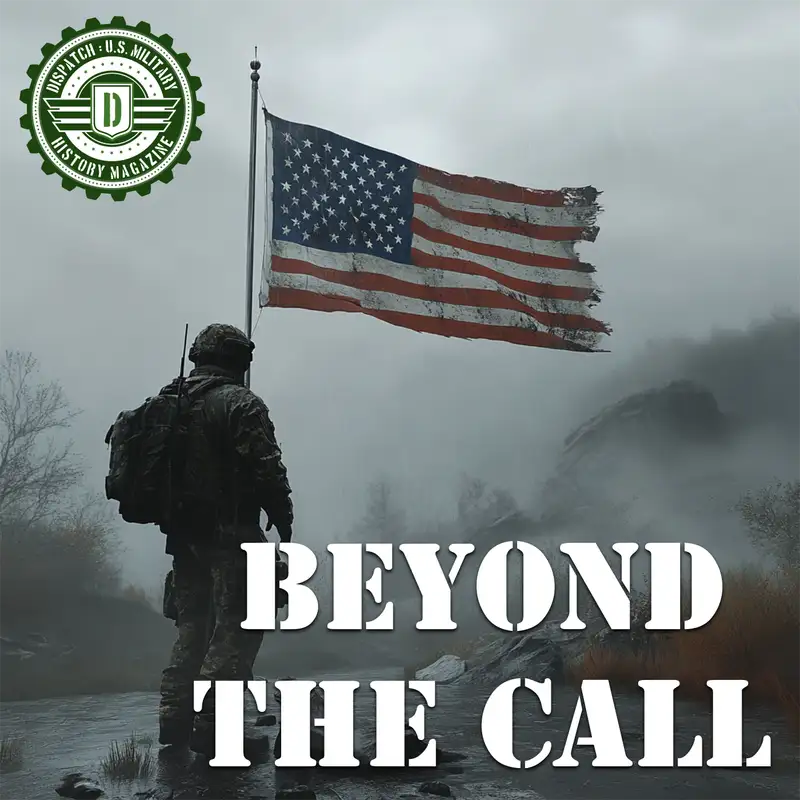
Beyond the Call: Technical Sergeant Cleto L. Rodríguez at Paco Railroad Station, Manila, 1945
Welcome to Beyond the Call, where history, leadership, and heroism come alive. Today’s story explores Technical Sergeant Cleto Rodriguez at the Paco Railroad Station in nineteen forty five, a powerful account of courage and responsibility in combat. If you enjoy learning more about military history and extraordinary individuals, you can find more articles, podcasts, and resources at Trackpads dot com. The city of Manila is burning, and American soldiers are fighting block by block to drive Japanese forces from the Philippine capital. On the south side of the city, in the Paco district, a concrete railroad station has become a fortress that dominates the approaches around it.
An American platoon moves out across an open field toward that station, rifles up, automatic weapons ready. The plan is simple on paper: cross the ground, close on the building, and seize the strongpoint that blocks the advance. The reality is something else. From the windows and firing ports of the station, and from nearby pillboxes, Japanese machine guns and a twenty millimeter cannon erupt in a storm of fire. In seconds, men are down, and the survivors are pressed into the dirt about one hundred yards short of their objective, pinned flat in a field with almost no cover.
Lying there in the dust is a young automatic rifleman named Cleto Rodriguez. He can see the flashes from the station’s upper windows and the bodies of comrades who tried to crawl forward and did not make it. Every instinct tells him to stay low, to hug the earth and wait for someone else to solve the problem. Yet he also knows that if nothing changes, that field will become a graveyard and the advance will die right there. Beyond the Call is the Monday feature of Dispatch: U.S. Military History Magazine. In this moment, Rodriguez decides that simply surviving is not enough.
Beside him is another soldier, Private First Class John Reese Junior. Without waiting for orders, the two men make a decision that will change the course of the fight. They break away from the pinned platoon and sprint laterally across the field toward a small house about sixty yards from the station. The dash is a gamble made in full view of the enemy, with bullets kicking up dirt at their heels and snapping overhead. They reach the building and crash in behind its thin walls, breathing hard, very much alive but now far out in front of their own lines.
From that fragile foothold, they begin to work. Rodriguez uses his automatic rifle to sweep station windows and firing slits, aiming at muzzle flashes and any sign of movement. Reese adds his own fire, picking off figures who try to shift positions or bring heavier weapons to bear. For roughly an hour, the pair stays in that advanced position, under constant observation and intermittent fire, returning shot for shot and forcing many of the defenders to keep their heads down. It is not a single burst of heroism. It is steady, disciplined combat that slowly eats away at the strongpoint.
As the fight wears on, they notice something new. Groups of Japanese soldiers are trying to move forward to reinforce the pillboxes around the station, running across short stretches of open ground and climbing toward those concrete bunkers. If those reinforcements get through, the next American assault will face even more guns and more determined resistance. Rodriguez and Reese shift their fire, raking the exposed figures as they run. Again and again, enemy groups try to make that dash. Again and again, they are cut down before they reach the pillboxes. By the time the last group breaks and scatters, the two Americans have stopped a large number of reinforcements from ever reaching the line.
Even that is not enough to break the station. Rodriguez understands that to truly cripple the strongpoint, he has to get closer. Covered by Reese’s steady stream of fire from the house, he leaves their small shelter and begins moving toward the station in short rushes. Each bound carries him deeper into ground dominated by enemy weapons. At about twenty yards from the building, he can see individual doorways and gun ports, and he can feel the shock of nearby explosions in his chest. The distance is short, but in a fight like this it might as well be miles.
Reaching a doorway, Rodriguez pulls the pins on his grenades and throws them inside in quick succession. Each explosion sends smoke, dust, and debris boiling out into the open air. Inside the station, defenders are killed or stunned, and a twenty millimeter gun along with a heavy machine gun that had been punishing his platoon are destroyed. The Paco Railroad Station, which just minutes earlier felt like a solid wall of steel and concrete, now has gaps in its fire and chaos in its rooms. One man, backed by a single comrade, has just torn out some of its most dangerous teeth. It is a decisive change.
Now the problem is getting back. Their ammunition is running low, and the enemy is furious, searching for the source of the attack that has gutted their defenses. The open ground between the house and American lines is still swept by small arms fire. Rodriguez and Reese begin a fighting withdrawal, moving in bounds, one man firing while the other falls back a short distance, then switching roles. They drag enemy attention and bullets onto themselves instead of the prone platoon. During this movement, Reese is hit and killed, falling in the same battle where he stood by his friend at every step. Rodriguez reaches friendly lines alone, having spent more than two and a half hours forward of his own troops, killing many enemy soldiers and throwing the strongpoint into confusion.
Two days later, the pattern repeats in a different corner of Manila. In another engagement, Rodriguez once again pushes ahead of his comrades to take on a fortified enemy gun. He kills several more Japanese soldiers and destroys yet another well placed twenty millimeter weapon that threatens the advance. This second action reinforces the same picture: a soldier who sees critical threats clearly, who refuses to let them stand, and who accepts extraordinary personal risk to clear the way for others. His conduct is not an isolated flash of bravery. It is a consistent way of responding when the stakes are highest.
To understand how he came to that moment in Manila, it helps to look back to his beginnings in Texas. Cleto Rodriguez was born in San Marcos in 1923, the child of Mexican American parents. When he was nine, both of his parents died, and he was sent to live with relatives in San Antonio. The move forced him to grow up quickly in a larger, harsher city. As a boy he worked as a newsboy in downtown San Antonio, selling papers at the Gunter Hotel and on nearby streets. The job meant long hours, little money, and daily lessons in how to read people and look after himself.
Those early years were not easy. He lived close to the edge of poverty, and like many boys in those circumstances he sometimes flirted with trouble. Yet the same toughness that could have gone in the wrong direction instead became a kind of resilience. When war came and headlines he once sold turned into calls for service, Rodriguez chose to enlist. In early 1944 he entered the United States Army in San Antonio. After basic training he became an infantryman and joined Company B of the One Hundred Forty Eighth Infantry Regiment in the Thirty seventh Infantry Division. There he learned how to move under fire, how to work within a squad, and how to handle the heavy automatic rifle that would define his battlefield role.
By the time his division returned to the Philippine Islands to help liberate them from Japanese occupation, Rodriguez was part of a seasoned combat unit. Manila was now a central objective in the campaign, and within that shattered city, rail lines and stations like the one at Paco held real tactical value. The Paco Railroad Station stood at the edge of a plaza, its concrete mass and surrounding pillboxes tying into a broader network of defenses. Several hundred defenders, including marine troops, were prepared to fight to the last. For the American infantry moving against it, the station was not just a building. It was a problem that had to be solved if the advance through Manila was to continue.
When Rodriguez’s actions at Paco were later summarized in his Medal of Honor citation, the language followed a familiar pattern. It spoke of gallantry and intrepidity above and beyond the call of duty. It described how his platoon was halted one hundred yards from the strongpoint by devastating fire during a frontal assault across open ground. It recorded that he left his platoon on his own initiative to move with a comrade to an advanced position. Behind each phrase sat the reality of men pressed into the dirt, the decision to risk everything by standing up, and the sprint across open ground that could easily have ended in death.
The citation also notes that he and his comrade remained in that forward position for an hour, firing at targets of opportunity and killing many enemy soldiers. That line captures the slow grind of sustained combat at close range, where every shot has to count and where the temptation to fall back is constant. When it states that they saw replacements moving toward pillboxes and killed more than forty of them, the citation is pointing to their ability to read the flow of battle, to see that stopping those reinforcements would make the next assault less costly. When it describes Rodriguez moving to within twenty yards of the station, throwing grenades into a doorway, and destroying a twenty millimeter gun and a heavy machine gun, it compresses into one sentence a series of exposing, terrifying moves under fire.
Why did all of this matter beyond that one field? The Paco Railroad Station was a major anchor in the Japanese defense of southern Manila. Its guns commanded the approaches and covered routes that American units needed to clear to move deeper into the city. As long as the station’s weapons remained intact, any attempt to cross that ground would mean heavy casualties and delays. By killing large numbers of defenders, blocking reinforcements, and knocking out key weapons, Rodriguez and Reese turned a strong, well manned position into a shaken one with holes in its fire. When American forces moved again against the station, they were facing fewer guns, fewer defenders, and more confusion.
The impact can be measured in the lives of other soldiers who did not have to die under that fire and in the time saved in a brutal city fight. Street battles like the one in Manila are often decided block by block, strongpoint by strongpoint. A position that falls more quickly because of the actions of a small team can shorten the overall battle and reduce the need for heavier bombardment. In a city already suffering from widespread destruction and civilian casualties, anything that helped speed the collapse of a hardened defense without flattening more neighborhoods had real meaning. Rodriguez’s decisions under fire belonged to that category.
The leadership on display at Paco did not come with a bar of rank on the shoulder. Rodriguez was a private when he performed the actions that later earned the Medal of Honor. Leadership in his case meant seeing what had to be done when established plans failed, deciding to move toward danger to change the situation, and inspiring at least one other man to come with him. It was the kind of leadership that emerges in small units when the formal chain of command is pinned down or cut apart by fire. It shows that courage and initiative at the lowest level can reshape a fight that seems lost.
His character also speaks to a wider story. Rodriguez was one of a relatively small number of Mexican American soldiers to receive the Medal of Honor in the Second World War. His award highlighted a broader truth: that Americans of Hispanic heritage served and sacrificed in large numbers, often without due recognition at the time. For service members and leaders today, his example offers several lessons. Hard early experiences can forge resilience rather than resentment. Courage is not the absence of fear but the refusal to be ruled by it when others are counting on you. And real initiative is not reckless; it is a clear eyed choice to act when inaction is more comfortable but far more costly.
After the war, Rodriguez returned to San Antonio with the burden of memory and the responsibilities of a young family. He married Flora Munoz in late 1945, and together they raised four children. For a period he worked as a representative for the Veterans Administration, helping other former soldiers navigate the system that governed their benefits and care. The pull of uniformed service remained, though, and in the early 1950s he joined the United States Air Force, serving in the Air Police. A few years later, he came back to the United States Army, this time in the Military Police Corps, and he stayed in uniform until 1970.
By the time he retired from the Army as a master sergeant, Rodriguez had spent most of his adult life in service. He carried with him the distinction of being a Medal of Honor recipient, but he also carried the quieter identity of a career noncommissioned officer who dealt daily with the discipline, routines, and small crises of military life. In 1990 he died and was laid to rest with full military honors at Fort Sam Houston National Cemetery in San Antonio. His grave lies not far from the streets where he once sold newspapers as a boy and from the neighborhoods where he raised his family. The story had come full circle.
His name, however, did not fade into the background. In 1975 an elementary school in San Antonio was renamed Cleto Rodriguez School in his honor. Generations of children have since walked through doors bearing his name, some of them hearing the story of the young automatic rifleman who ran across an open field in Manila. Years later he also received the Texas Legislative Medal of Honor posthumously, another signal that his courage remained important to the state that had shaped him. These formal recognitions are more than symbols. They are ways a community says that a life like his should not be forgotten.
Today the memory of Technical Sergeant Cleto Rodriguez lives in classrooms, veterans’ halls, local stories in San Antonio, and in the broader study of the battle for Manila. His story reminds listeners that behind every citation is a full human life, with childhood losses, small jobs, family commitments, and years of service that never make it into official summaries. It shows how a single decision, made in a few heartbeats under fire, can alter the fate of dozens of others and echo down through history. As we remember him, we honor not only his two and a half hours at Paco but the whole arc of his journey, from orphan and newsboy to soldier, husband, father, and master sergeant who chose, more than once, to move forward when others were pinned down.